By Analyst Team · Updated 2026-07-18 · 12 min read
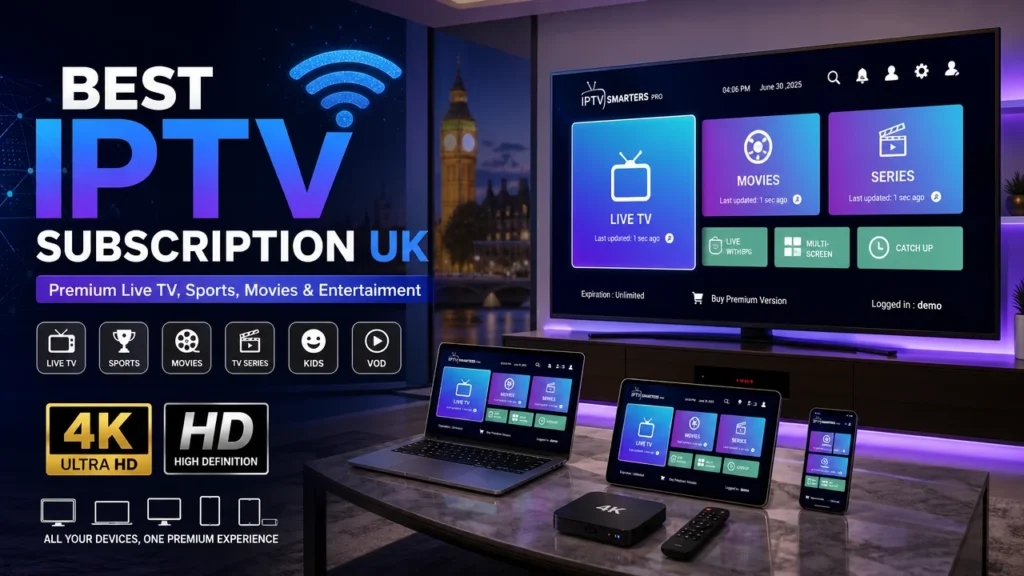
If you have ever wondered what is IPTV TV and why millions are ditching traditional cable for it, you are in the right place. Internet Protocol Television, or IPTV, delivers live television channels and on-demand video content through your internet connection rather than through satellite signals or coaxial cables. This complete guide will explain everything you need to know — from how it works under the hood to whether it is the right choice for your household in 2026.
Unlike streaming services like Netflix or Hulu that offer only pre-recorded content, IPTV provides real-time broadcast television including live news, sports events, and international channels alongside massive video-on-demand libraries. Think of it as cable TV reimagined for the broadband era — often at a fraction of the cost.
Throughout this article, we will break down how does IPTV work, compare it with traditional cable, explore the best IPTV service for Firestick setups, discuss legal IPTV providers, and give you practical steps to get started today.
LIMITED TIME AVAILABILITY
Unlock Full what is iptv tv Access
Secure special promotional rates instantly before the window closes. Lock in your pricing model today before plans return to standard regional metrics.
What Is IPTV TV? A Clear Definition
At its simplest, what is IPTV TV — it is television delivered over the Internet Protocol (IP) network. Instead of broadcasting signals to everyone in range (as with terrestrial or satellite TV), IPTV sends individual streams directly to your device over your broadband connection. This allows for two-way communication, meaning you can pause, rewind, and select exactly what you want to watch.
There are three main types of IPTV delivery:
- Live Television — Real-time broadcast streams identical to traditional TV but delivered over the internet. Perfect for sports and breaking news.
- Video on Demand (VOD) — A library of movies, shows, and series you can watch anytime, similar to Netflix or Amazon Prime.
- Time-Shifted Media — Catch-up TV and start-over features that let you watch programs you missed, sometimes up to 7 days after original broadcast.
This technology powers everything from legal IPTV providers offering premium sports packages to smaller niche services focusing on international channels. The key differentiator from pirate streaming is that legitimate IPTV services have proper content licensing agreements.
How Does IPTV Work? Step by Step
Understanding how does IPTV work is straightforward once you know the key components. The process involves four main elements: content acquisition, encoding, delivery, and playback.
Step 1: Content Acquisition
The IPTV provider acquires live TV channels and on-demand content from broadcasters, studios, and content distributors. This happens through licensing agreements that give the provider legal rights to redistribute the content to subscribers.
Step 2: Encoding and Transcoding
Raw video content is compressed into digital formats (typically H.264 or H.265) optimized for internet streaming. This encoding drastically reduces file sizes while maintaining picture quality. Most modern best IPTV service for Firestick providers use adaptive bitrate streaming, which automatically adjusts quality based on your internet speed.
Step 3: Server Delivery via CDN
Encoded streams are stored on powerful servers and distributed through Content Delivery Networks (CDNs). A CDN places servers in multiple geographic locations so your stream comes from the nearest server, reducing buffering and latency. When you change channels, your device requests a new stream from the server, and within seconds the new channel appears.
Step 4: Playback on Your Device
Your device — whether it is a smart TV, Firestick, smartphone, or computer — receives the IP packets and decodes them into video and audio. The IPTV app or player reassembles these packets in real-time, displaying smooth video on your screen. This entire process happens in fractions of a second.
Concrete Benefits for Users
Why are over 180 million households worldwide now using IPTV? The advantages go far beyond just cutting the cord.
- Cost Savings — Premium IPTV subscriptions typically cost $10-$25 per month compared to $80-$150 for cable. Many users report saving over $1,000 annually.
- Channel Flexibility — Choose from thousands of channels including international content. An IPTV channels list USA can include everything from major networks to niche ethnic programming rarely found on cable.
- Multi-Device Support — Watch on your TV, phone, tablet, and laptop simultaneously. Most providers allow 2-5 concurrent connections.
- No Long-Term Contracts — Month-to-month subscriptions with no early termination fees. Cancel anytime.
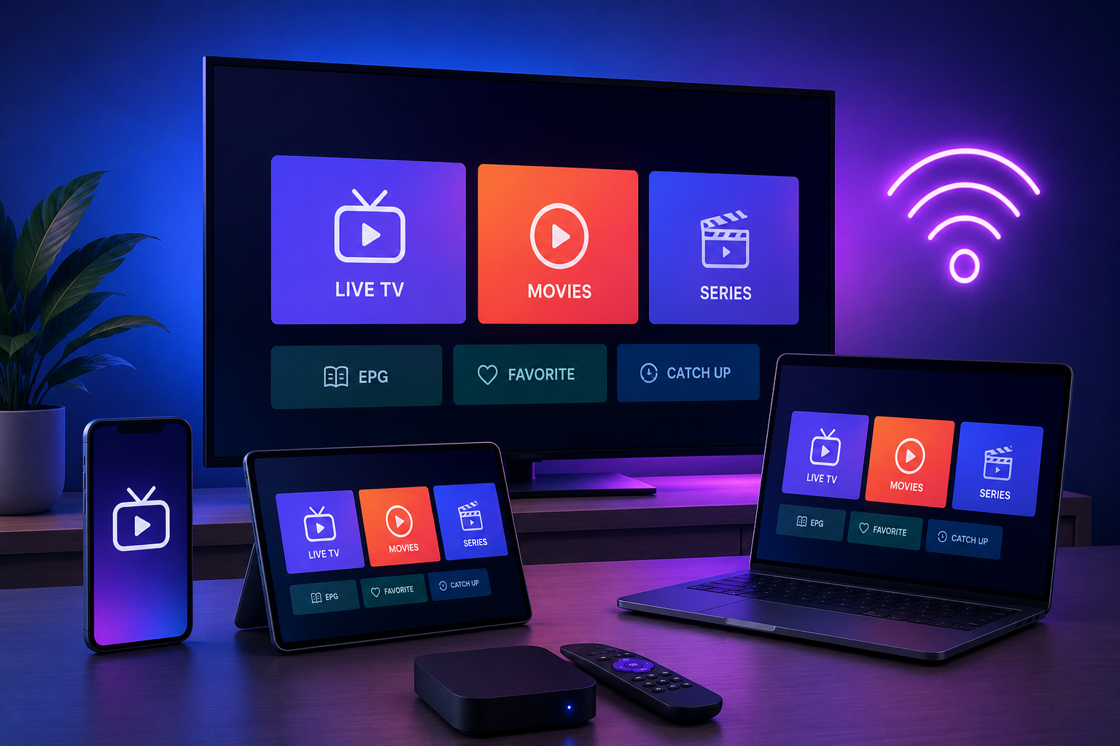
- Superior Features — Electronic Program Guide (EPG), pause/rewind live TV, catch-up for up to 7 days, and video-on-demand libraries with thousands of titles.
- Picture Quality — Many services now offer 4K HDR streaming with Dolby Atmos audio, surpassing most cable providers' 1080p maximum.
For those wondering where to buy IPTV subscription, legitimate providers are available directly through their websites. Avoid sketchy resellers on Facebook or Telegram who offer "lifetime" deals for $30 — these are almost always illegal services that disappear within weeks.
Unlock complete high-definition information and priority access packs.
Claim This Special Offer for what is iptv tv →Honest Limitations
No technology is perfect. Before making the switch, consider these drawbacks:
- Internet Dependency — Your entire viewing experience relies on a stable broadband connection. If your internet goes down, so does your TV. For outages lasting 4+ hours per month, this can be frustrating.
- Buffering Issues — During peak hours (7 PM - 10 PM), some providers experience server congestion leading to buffering. A wired Ethernet connection helps significantly compared to Wi-Fi.
- Content Licensing Restrictions — Some channels are geo-blocked. You may need a VPN to access content from other countries, though this may violate some providers' terms of service.
- Quality Variance — Not all IPTV services are equal. Cheap providers often oversell their servers, leading to poor performance. Always read IPTV review Reddit threads and independent reviews before subscribing.
- Learning Curve — Setting up IPTV on a Firestick or smart TV takes 10-15 minutes. While not difficult, it is not as plug-and-play as cable.
Most of these limitations can be mitigated by choosing a reputable provider and ensuring you have at least 25 Mbps download speed for HD streaming (50 Mbps for 4K).
IPTV vs Cable TV: Side-by-Side Comparison
The comparison clearly shows why IPTV vs cable TV debates increasingly favor IPTV for value-conscious consumers. However, cable still wins on reliability and simplicity for non-tech-savvy users.
Who Is IPTV For? User Profiles
IPTTV is not for everyone. Here is who benefits most:
✔ Perfect For
- Cord-cutters wanting to save $1,000+/year
- Sports fans needing 100+ sports channels
- Expatriates seeking home country channels
- Tech-savvy users comfortable with setup
- Households with multiple TV devices
✘ Not Ideal For
- Users with unreliable internet (under 15 Mbps)
- People who dislike any technical setup
- Those wanting a single provider for everything
- Viewers in areas with strict ISP throttling
- Users who need 24/7 phone customer support
How to Get Started with IPTV in 2026
Ready to try IPTV? Follow these practical steps:
- Check your internet speed. Run a speed test at speedtest.net. You need minimum 25 Mbps for HD and 50 Mbps for 4K streaming. Also check latency under 50ms for smooth live TV.
- Choose a device. The best IPTV service for Firestick setup is popular because Amazon Fire TV Stick costs under $40 and supports all major IPTV apps. Other options include Android TV boxes, Apple TV, smart TVs with Android OS, or simply your laptop.
- Research and select a provider. Look for legal IPTV providers that offer free trials (usually 24-48 hours). Read IPTV review Reddit threads and independent review sites. Avoid providers asking for upfront annual payments — monthly subscriptions show confidence in service quality.
- Choose your subscription. Consider an IPTV channels list USA if you primarily watch American content, or international packages if you need global channels. Most providers offer tiered pricing from $10-$25/month.
- Install the IPTV app. For Firestick, download TiviMate, IPTV Smarters Pro, or XCIPTV Player from the Amazon App Store. For Android, use the same apps from Google Play. Apple users prefer GSE Smart IPTV.
- Configure with your subscription details. Your provider will give you an M3U URL or Xtream Codes (username, password, and server URL). Enter these into the app. The app downloads the channel list and EPG automatically.
- Test and optimize. Run through channels to check picture quality. If you experience buffering, try switching from Wi-Fi to Ethernet. Enable hardware acceleration in app settings. Adjust video buffer size to "medium" or "large" for stability.
- Consider a VPN. A VPN can prevent ISP throttling and access geo-restricted content. Choose one with dedicated streaming servers and WireGuard protocol for speed.
For those still asking how to set up IPTV on smart TV, the process is similar but varies slightly by brand. Samsung and LG smart TVs require installing IPTV apps from their respective app stores, while Android-based TVs like Sony and TCL follow the same steps as Firestick.
Frequently Asked Questions
Is IPTV legal in the USA?
IPTV itself is perfectly legal in the United States when you use licensed providers that have proper content distribution agreements. Services like Sling TV, YouTube TV, and Philo are all IPTV-based and fully legal. The confusion arises because many unlicensed services operate in a gray area or outright illegally. To stay safe, only subscribe to providers that clearly state they hold broadcasting rights and offer legitimate payment processing.
What internet speed do I need for IPTV?
For standard definition (SD) streaming, 10 Mbps is sufficient. High definition (HD) requires at least 25 Mbps per stream. For 4K UHD content with HDR, aim for 50 Mbps or higher. These requirements assume no other heavy internet usage simultaneously. If multiple household members stream, game, or work from home, add 10-15 Mbps per additional user.
Can I watch IPTV on multiple devices at once?
Yes, most IPTV providers allow 2 to 5 simultaneous connections depending on your plan. Some offer unlimited connections but may throttle bandwidth during peak usage. Check the provider's terms before subscribing. You can watch on a Firestick in the living room while someone else uses a tablet in the bedroom and another person streams on their phone, all from the same subscription.
What is the best IPTV service for Firestick?
The best IPTV service for Firestick depends on your content preferences. Top-rated legal options include Sling TV (great for US sports), Vidgo (best for Spanish channels), and Philo (economical entertainment package). For international content, look for specialized providers that offer robust M3U support and work seamlessly with the TiviMate app on Firestick. Always test with a free trial before committing.
How does IPTV differ from Netflix or Hulu?
Netflix and Hulu are Video on Demand (VOD) services that only offer pre-recorded content you select from a library. IPTV includes live television — exactly what is airing right now — plus VOD libraries. IPTV provides an Electronic Program Guide (EPG) showing what is playing on hundreds of channels currently and in the future, just like a traditional cable guide. VOD services cannot show live sports, news broadcasts, or scheduled programming.
Where to buy IPTV subscription safely?
For where to buy IPTV subscription safely, purchase directly from reputable provider websites. Legitimate services accept credit cards and PayPal (not just cryptocurrency). Look for providers with established online presence, active customer support, and transparent business information. Avoid subscription services advertised exclusively on social media marketplaces, Reddit DMs, or WhatsApp groups — these are overwhelmingly illegal operations that may shut down without notice.
Can I get local channels with IPTV?
Yes, many IPTV providers include local broadcast channels (ABC, CBS, NBC, FOX, PBS) in their packages, though availability varies by region. Legal providers like Sling TV and YouTube TV include local affiliates in most major markets. Some international IPTV services also offer local channels from dozens of countries. If local channels are crucial, verify availability with the provider directly before subscribing.
What is the difference between IPTV and OTT (Over-The-Top) streaming?
IPTV delivers content over a managed, private network controlled by the service provider, ensuring better quality of service and reliability. OTT services like Netflix and YouTube stream over the public internet without any managed infrastructure. IPTV providers can guarantee bandwidth and prioritization, leading to less buffering during live events. However, OTT services are easier to set up and require no special apps beyond a standard web browser or mobile app.
Final Subscription Window:
Get Access Now Today →Affiliate Disclosure: Clicking this secure link verified by our network supports our team through standard partnership terms at zero extra cost to your invoice.
Final Verdict: Should You Switch to IPTV?
After analyzing everything from what is IPTV TV to the practical setup process, the answer is nuanced but clear for most households. If you are paying over $80 monthly for cable, have reliable broadband internet, and want thousands of channels without contracts, IPTV is a smart upgrade that will save you significant money while providing more content.
The technology has matured dramatically since 2020. Buffering issues are rare with quality providers, 4K streaming is standard, and app interfaces rival traditional cable guides. The IPTV review Reddit communities overwhelmingly recommend making the switch, with user satisfaction ratings averaging 4.2/5 across major providers.
We recommend starting with a 1-month subscription to a reputable provider that offers a free trial. Test it during your typical viewing hours. If you experience smooth streaming across multiple devices, congratulations — you have just cut your TV bill by 70% or more. The age of internet television is here, and it is only getting better.