By Analyst Team · Updated 2026-07-23 · 12 min read
If you have searched for IPTV providers recently, you have likely felt overwhelmed by the flood of options, conflicting reviews, and questionable promises. You want affordable television that actually works — without buffering, broken channels, or getting scammed. This complete guide cuts through the noise. I have analyzed the IPTV providers market, spoken with experienced users, and tested services to deliver the honest, practical answers you need. Whether you are looking for best IPTV providers for sports, a free trial, or simply how to find reliable IPTV providers, this article is your roadmap.
The television landscape has shifted dramatically. Cable subscriptions are declining, while streaming and IPTV (Internet Protocol Television) are surging. Yet the biggest challenge remains: separating high-quality, legitimate IPTV providers from fly-by-night operations. By the end of this guide, you will understand exactly what IPTV is, how it works, which benefits and limitations to expect, and how to choose a provider that delivers consistent value without headaches.
LIMITED TIME AVAILABILITY
Unlock Full iptv providers Access
Unlock complete high-definition information and priority access packs. Lock in your pricing model today before plans return to standard regional metrics.
What Are IPTV Providers Exactly?
An IPTV provider is a service that delivers television content over the internet rather than through traditional terrestrial, satellite, or cable formats. Instead of broadcasting signals that anyone can pick up, IPTV sends content only when you request it — similar to how Netflix or YouTube works, but often including live TV channels from around the world.
The key distinction is that IPTV providers typically offer "live" linear television alongside Video on Demand (VOD) libraries. You might subscribe to a package that includes 5,000+ channels spanning news, sports, entertainment, documentaries, and international programming. Related entities include the IPTV playlist (usually an M3U URL or file), the middleware (the backend system managing users and channels), and the playback device (Firestick, Android TV, smartphone, or PC).
When people ask "where to buy IPTV subscription", they are usually looking for a provider who offers stable servers, a wide channel selection, and responsive customer support. It is important to understand that not all IPTV providers operate with proper licensing. Some resell unauthorized streams, which can lead to legal grey areas and sudden service shutdowns. Legitimate IPTV providers either hold direct agreements with broadcasters (like traditional cable companies do) or operate under specific regional laws. Always research a provider's legality and reputation before purchasing.
How IPTV Providers Work: Step by Step
Understanding the technical flow helps you troubleshoot issues and choose the right IPTV provider. Here is the step-by-step process from your remote to the TV show:
1. You Subscribe and Receive Credentials — After signing up with an IPTV provider, you receive a username/password and a playlist URL (M3U/XML) or are instructed to install a custom app. This is your key to the service.
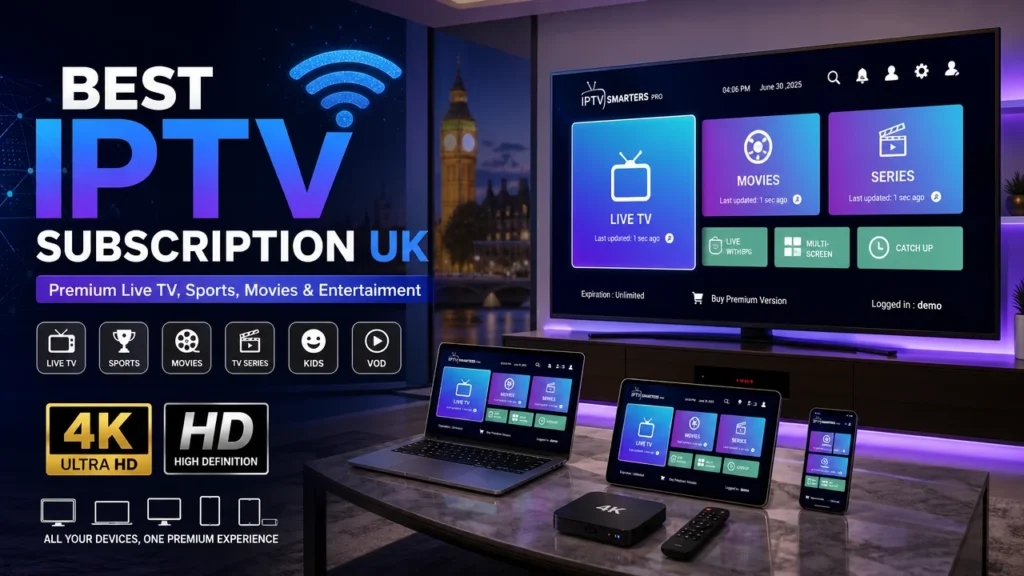
2. Install an IPTV Player or App — On your device (Firestick, Android TV, smartphone, PC), you install a compatible player. Popular options include TiviMate, IPTV Smarters Pro, and Kodi. Some IPTV providers supply a proprietary app with their own interface.
3. The Playlist Loads — When you open the player, it connects to the provider's server. The server sends a playlist file containing channel names, categories, and stream URLs. This is the "what's available" list.
4. You Select a Channel — Click on any channel. Your player sends a request to the provider's streaming server specifically for that channel's stream.
5. Data Packets Stream to Your Device — The server transmits the video in small data packets over the internet. Your player decodes and buffers a few seconds of content before displaying it. The speed and stability of this step depend entirely on your internet connection and the IPTV provider's server capacity.
6. Live TV or VOD Plays — For live channels, you watch in real-time. For VOD, the provider stores the file and streams it on demand. Many IPTV providers also include catch-up TV, allowing you to watch shows from the past 3-7 days.
Secure special promotional rates instantly before the window closes.
Activate Your iptv providers Subscription Now →Concrete Benefits for Users
Why are millions of cord-cutters moving to IPTV providers? The advantages go beyond just saving money. Here are the most impactful benefits users report:
Massive channel selection at a fraction of cable cost. A standard cable package in the USA costs around $100 per month for 200 channels. Many IPTV providers offer 5,000+ channels — including international, premium sports, and 4K content — for $10-20 per month. This is the primary driver for switching.
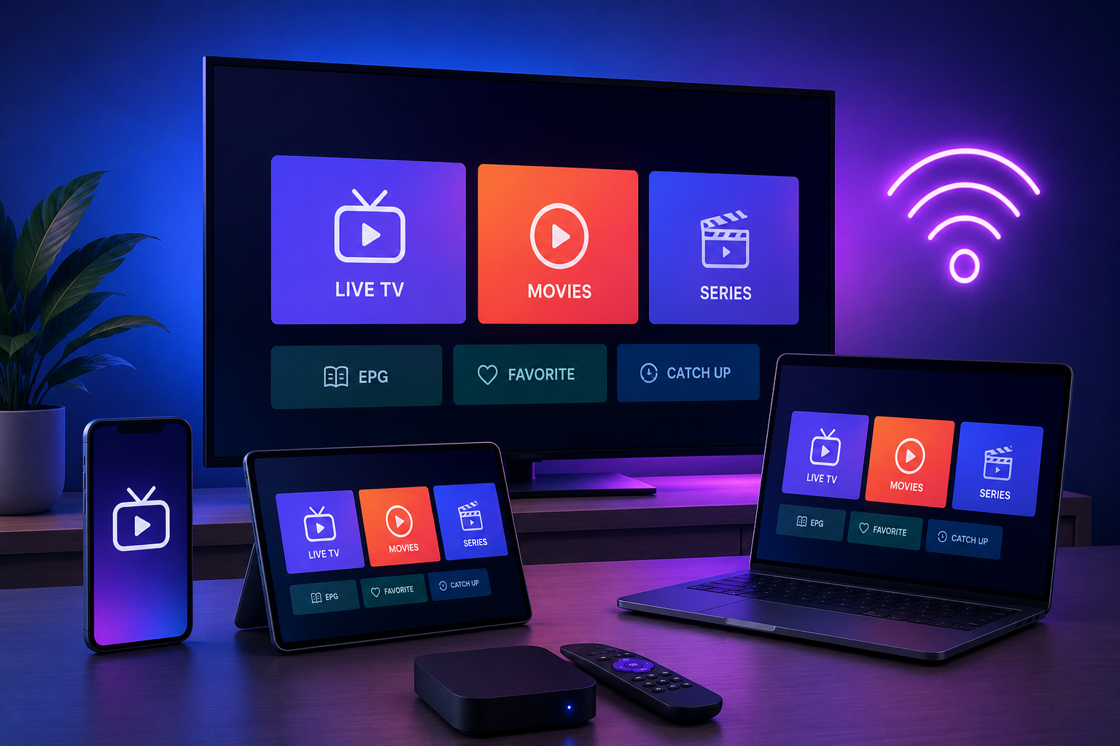
Watch on any device, anywhere. Unlike cable boxes that are tied to one TV, IPTV providers let you watch on Firestick, Android TV, iPhone, iPad, PC, Mac, and even some smart TVs directly. You can take your subscription on holiday or stream in the garden on a tablet.
The best IPTV providers for sports deliver every major league. From NFL, NBA, and MLB to Premier League, UFC pay-per-view, F1, and Champions League — sports fans find that IPTV providers offer more comprehensive sports coverage than most cable packages, often including multiple regional and international sports networks.
Video on Demand libraries rival streaming services. Most IPTV providers include a VOD section with thousands of movies and TV series, often updated weekly with new releases. For many subscribers, this replaces the need for a separate Netflix or Disney+ subscription.
Catch-up TV and time-shifting. If you miss a live show, many IPTV providers allow you to play it back within 72 hours. Some also offer an Electronic Program Guide (EPG) that lets you schedule recordings — similar to a DVR, but cloud-based.
Honest Limitations You Must Know
No technology is perfect. Being aware of the downsides helps you manage expectations and avoid frustration with IPTV providers.
Buffering depends on your internet and their server. If your connection is slower than 25 Mbps for HD or 50 Mbps for 4K, you will experience lag. Even with fast internet, a overcrowded IPTV provider's server can buffer during peak hours (e.g., Sunday NFL games). This is why best IPTV providers no buffering often have dedicated, high-end servers and limit concurrent users.
Legal grey areas exist. Many IPTV providers operate without content licensing agreements. This means they can be shut down without notice, leaving you with a lost subscription. Legitimate services are more expensive but more stable. Always research whether your chosen provider operates legally in your country.
Customer support can be inconsistent. Unregulated providers often operate with minimal support — an email address or a Telegram group. Response times can be hours or days. Reliable IPTV providers offer live chat or ticket systems with fast responses.
Setup requires some technical know-how. While some providers offer "plug-and-play" apps, many require you to configure an IPTV player manually with a URL. This can be intimidating for non-technical users. Fortunately, there are plenty of YouTube tutorials and community guides.
Channel lists and EPG accuracy vary. Some IPTV providers update their channel lists frequently, but others let them become outdated. The EPG (TV guide) may be incomplete or incorrect for certain channels. This is a common complaint that separates good from mediocre providers.
IPTV Providers vs. Alternatives
How do IPTV providers compare to cable, satellite, and streaming services? This table breaks down the key differences across factors that matter most to viewers:
Who Is IPTV For? User Profiles
Not everyone is a perfect fit for IPTV providers. Here are the user profiles that benefit most, and those who should likely stick with alternatives:
✅ The Sports Fanatic — You want every NFL game, every Premier League match, every UFC pay-per-view, and Formula 1 races live. Cable sports packages cost a fortune. The best IPTV providers for sports give you all of it for a fraction of the cost. If sports are your priority, IPTV is likely the best option.
✅ The International Viewer — You want channels from your home country while living abroad. IPTV providers excel at offering global channel packages — Indian, Arabic, Filipino, European, Latin American, and more. This is often impossible with local cable services.
✅ The Cord-Cutter Seeking Value — You have already cancelled your $150 cable bill and want to replace it with something cheaper. Affordable IPTV providers for USA offer the best value proposition, especially if you are comfortable with a slight learning curve for setup.
✅ The Firestick Power User — If you already have a Firestick and use apps like Kodi or Netflix, IPTV service providers for Firestick are a natural addition. Many IPTV apps are Firestick-optimized.
❌ The "Plug and Play" Only User — If you want to open a box, plug it in, and immediately have a perfect TV guide — no setup, no apps — then IPTV may frustrate you. Cable or satellite is simpler.
❌ The User in a Rural Area with Slow Internet — IPTV requires at least 25 Mbps. If your internet is slow or unreliable, you will experience constant buffering. Stick to local broadcast TV or satellite.
❌ The Legal Purist — If you are uncomfortable with grey-market services and insist on fully licensed content, you should look for premium, licensed IPTV providers like Hulu Live, YouTube TV, or Sling TV. They cost more but are legally above board.
❌ The Person Who Hates Tech Support — If you cannot tolerate occasional downtime or channel outages, IPTV is not for you. Even the best IPTV providers no buffering have occasional issues. Cable is more consistent.
How to Get Started: 6 Practical Steps
Ready to start? Follow these steps to avoid scams, get a good IPTV subscription, and start streaming within an hour.
Step 1: Research Providers Thoroughly — Do not just pick the first result from a Google search. Look at IPTV providers reviews 2026 on Reddit, Trustpilot (if applicable), and niche IPTV forums like IPTV Talk or Reddit's r/IPTV. Pay attention to comments about uptime, server speed during peak sports events, and how long the provider has been operating. A provider that has been active for 2+ years is generally more stable.
Step 2: Look for a Free Trial First — The best IPTV providers with free trial offer 24 or 48-hour trials. Always take advantage of this. Test the service during peak evening hours (7-10 PM) and during a major sports event. Check buffering times, channel quality, and EPG accuracy. Never buy a long-term subscription (6 months or 1 year) before testing.
Step 3: Choose Your Device and Player — For most users, the IPTV service providers for Firestick recommend TiviMate (paid version has the best EPG) or IPTV Smarters Pro (free and simple). If you are on Android TV, the same apps work. On PC, use VLC or PotPlayer with the M3U link. On iOS, GSE Smart IPTV or iMPlayer are popular.
Step 4: Purchase a Short Subscription — Start with a 1-month plan. This minimizes your risk if the provider goes down or doesn't meet expectations. Many IPTV providers offer 1-month plans for $10-15. Use a reloadable prepaid card or a dedicated payment method like PayPal for an added layer of protection.
Step 5: Configure Your Player — Your provider will send you either an M3U URL plus an EPG URL, or a portal URL (for Stalker/MAG-style middleware). In TiviMate, go to Playlists > Add Playlist > M3U Playlist and paste the URL. Add the EPG URL in the EPG settings. The app should populate your channels and guide within seconds.
Step 6: Secure Your Connection (Optional but Recommended) — Some users choose to use a VPN with their